
W. Yuan, J. Duan, T. Wang, Y. Liu, J. Guo, W. J. Cao, and R. J. Huang* (2026), Seasonal and day-night variations in light absorption properties of humic-like substances and effects of aqueous-phase photooxidation, Atmospheric Research, 330, doi:10.1016/j.atmosres.2025.108562.
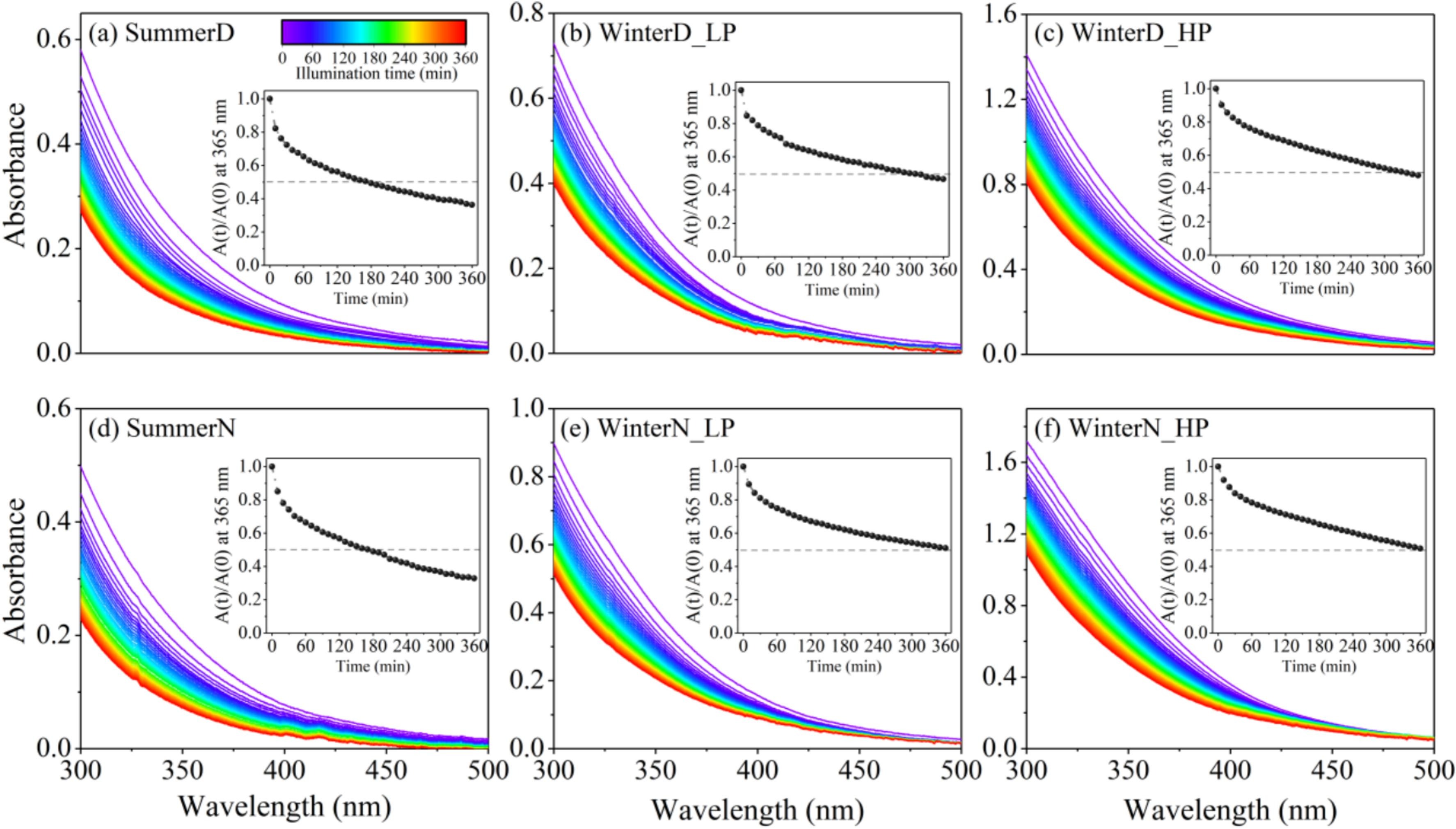
Atmospheric humic-like substances (HULIS) have efficient light absorption properties, significantly affecting atmospheric oxidative capacity and radiative forcing. However, the effects of photooxidation on light absorption properties of ambient HULIS remain poorly understood. In this study, the light absorption properties of HULIS in winter and summer, daytime and nighttime, were investigated in Xi'an, northwest China, as well as their changes during the aqueous-phase photooxidation process. The light absorption coefficient of HULIS at 365 nm (Abs365) in winter was 2.3–16.4 times that in summer, and the mass absorption efficiency of HULIS at 365 nm (MAE365) in winter was 1.9–2.8 times that in summer, indicating the chromophores in HULIS in winter had higher light absorption capacity. The absorption Ångström exponent (AAE) values of HULIS were lower in winter in the high pollution period (5.79–5.89) than in the low pollution period (6.41–6.79) and in summer (6.58–6.85), suggesting that the chromophores in HULIS in the winter high pollution period could contain more conjugated systems and aromatic ring structures. During the photooxidation experiment, the Abs365 value continued to decrease, indicating the photobleaching nature of HULIS. The atmospheric half-lives (τ1/2) of HULIS were estimated to be 6.5–14.8 h in different seasons. The AAE value of HULIS in the high pollution period of winter continued to increase during the photooxidation process, whereas in summer and the low pollution period of winter, it first increased and then remained relatively stable during the day, and continued to decrease at night. The results provided in this study are helpful for further understanding the atmospheric evolution of ambient HULIS.